Chief investor urges people to quit chasing AI, says it’s not a matter of if but when it ‘breaks’ — how to prepare
AI Stock Bubble Warning: Investor Urges Caution as Market Echoes Dot-Com Boom
Introduction
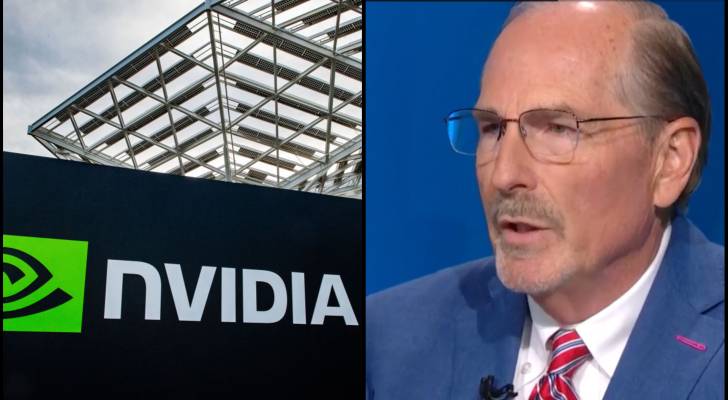
Bill Smead, founder of Smead Capital Management, has raised concerns about the current AI stock frenzy, warning that the market is showing signs of a bubble similar to the dot-com boom of the late 1990s. With AI-related stocks like Nvidia and Palantir experiencing unprecedented valuations, Smead argues that investors should prepare for a potential correction rather than assuming continued growth.
Key Facts and Market Trends
Since early 2023, Nvidia’s market value has surged twelvefold to $4.4 trillion, while Palantir’s valuation has skyrocketed twenty-eight-fold to $420 billion. Even smaller AI firms like CoreWeave have seen explosive growth, with a $60 billion valuation despite generating only $1.2 billion in quarterly revenue.
Smead warns that these valuations are detached from fundamentals, echoing the irrational exuberance seen before the dot-com crash. He predicts that when the AI bubble bursts, stocks could plummet, potentially losing up to 40% of their value in a short period.
Reuters reports that the technology sector now accounts for 34% of the S&P 500’s value, surpassing its peak concentration in March 2000—a red flag for market stability.
Expert Reactions and Concerns
Smead compares the current market to the late 1990s, when companies engaged in circular financing by investing in each other to inflate growth metrics. A similar trend is emerging today, with Nvidia’s planned $100 billion investment in OpenAI raising concerns about self-reinforcing valuation bubbles.
Paulo Carvao, a senior fellow at Harvard Kennedy School, notes that while today’s AI firms have tangible products, their spending still outpaces monetization, mirroring the speculative behavior of the dot-com era.
Potential Impact on AI, Crypto, and Business
If AI stocks experience a sharp correction, the ripple effects could extend beyond the tech sector. The S&P 500’s heavy weighting in technology means a downturn could impact broader market stability. Additionally, crypto markets—often correlated with tech trends—may also face volatility if investor confidence wanes.
For businesses, overreliance on AI-driven valuations could lead to financial strain if revenue fails to meet expectations. Companies with strong fundamentals and diversified revenue streams may weather the storm better than those heavily dependent on speculative growth.
Investment Strategies in a Volatile Market
Smead advises investors to avoid overconcentration in any single sector, particularly tech and AI. Instead, he recommends diversifying across industries such as energy, healthcare, retail, and real estate investment trusts (REITs), which tend to have more stable cash flows.
Key strategies for mitigating risk include:
- Diversification across sectors, investment styles, and geographies.
- Moderate exposure to high-growth tech stocks rather than heavy bets.
- Long-term focus on companies with sustainable profits rather than hype-driven valuations.
- Disciplined monitoring of market trends to avoid being caught in speculative bubbles.
Conclusion
While AI remains a transformative technology, its stock market performance may not sustain current valuations indefinitely. Investors should adopt a cautious approach, balancing growth potential with risk management to avoid significant losses in a potential correction.
SEO Title:
“AI Stock Bubble Warning: Investor Says Market Echoes Dot-Com Boom—How to Prepare”
Meta Description:
“Bill Smead warns of an AI stock bubble, comparing current market trends to the dot-com crash. Learn how to protect your investments amid potential volatility.”
This article provides a balanced perspective on the risks and opportunities in the AI-driven market, helping investors make informed decisions in an uncertain economic landscape.