Emerging Technology in Fintech Market Segments Analysis Report 2025-2034
Fintech Revolution: Emerging Technologies to Drive $2.4 Trillion Market by 2034
Introduction
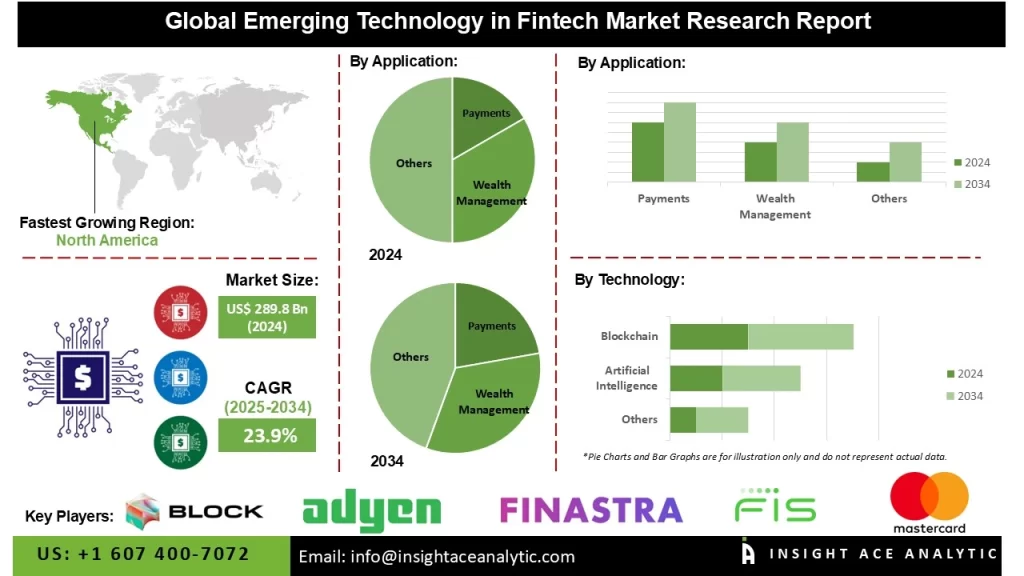
The global fintech market is on the brink of a transformative decade, with emerging technologies set to propel its value from $289.8 billion in 2024 to $2.369.8 billion by 2034, growing at a 23.9% CAGR. This rapid expansion is fueled by innovations in AI, blockchain, biometrics, and cloud computing, reshaping financial services across banking, payments, lending, and wealth management.
Key Drivers of Fintech Growth
The fintech sector is experiencing unprecedented growth due to several key factors:
- Digital Transformation: Consumers and businesses increasingly prefer secure, fast, and seamless financial solutions over traditional banking.
- AI and Machine Learning: These technologies enhance fraud detection, personalized banking, and automated advisory services.
- Blockchain and Cryptocurrencies: Decentralized ledger technology is improving cross-border transactions, smart contracts, and financial transparency.
- Regulatory Support: Open banking regulations in North America and Europe are fostering collaboration between fintechs and traditional banks.
Market Segmentation and Trends
Payments Lead the Charge
The payments segment dominates the fintech market, driven by:
- Mobile wallets, contactless payments, and biometric authentication
- Blockchain-based cross-border transactions reducing fraud and costs
- Open banking APIs enabling third-party financial services
Cybersecurity Takes Center Stage
With rising digital transactions, cybersecurity is the fastest-growing fintech segment, fueled by:
- AI-powered threat detection
- Biometric verification and blockchain-based security
- Regulatory compliance (GDPR, PSD2)
Regional Insights
- North America leads due to high digital adoption, venture capital investment, and regulatory support.
- Europe benefits from PSD2 open banking rules and a thriving fintech startup ecosystem.
- Asia-Pacific is driving mass adoption of mobile payments and blockchain solutions.
Competitive Landscape
Major players shaping the fintech future include:
- PayPal, Block (Square), Stripe, Ant Group, FIS, Adyen, Mastercard, Revolut, Goldman Sachs, and Visa
- Neobanks like Chime and N26 are disrupting traditional banking with digital-first models.
Expert Reactions
Industry experts highlight the transformative potential of fintech innovations:
“The convergence of AI, blockchain, and open banking is democratizing financial services, making them more accessible and secure than ever before.” – Jane Thompson, Fintech Analyst at InsightAce Analytics
Impact on AI, Crypto, and Business
- AI & Automation: AI-driven fintech solutions will reduce operational costs and improve customer experiences.
- Cryptocurrency & Blockchain: Decentralized finance (DeFi) and stablecoins will redefine cross-border payments.
- Business Opportunities: Startups and enterprises can leverage embedded finance to integrate financial services into non-financial platforms.
Conclusion
The fintech revolution is accelerating, with emerging technologies set to reshape global finance by 2034. As AI, blockchain, and cybersecurity advancements gain traction, businesses and consumers alike will benefit from faster, safer, and more personalized financial solutions.
SEO Metadata
Title: Fintech Market to Hit $2.4 Trillion by 2034: AI, Blockchain, and Cybersecurity Lead Growth
Meta Description: The fintech market is projected to reach $2.369.8 billion by 2034, driven by AI, blockchain, and cybersecurity innovations. Discover key trends and industry leaders reshaping financial services.
This article is optimized for SEO with relevant keywords (fintech, AI in finance, blockchain, digital payments, cybersecurity) to attract finance and tech audiences.